





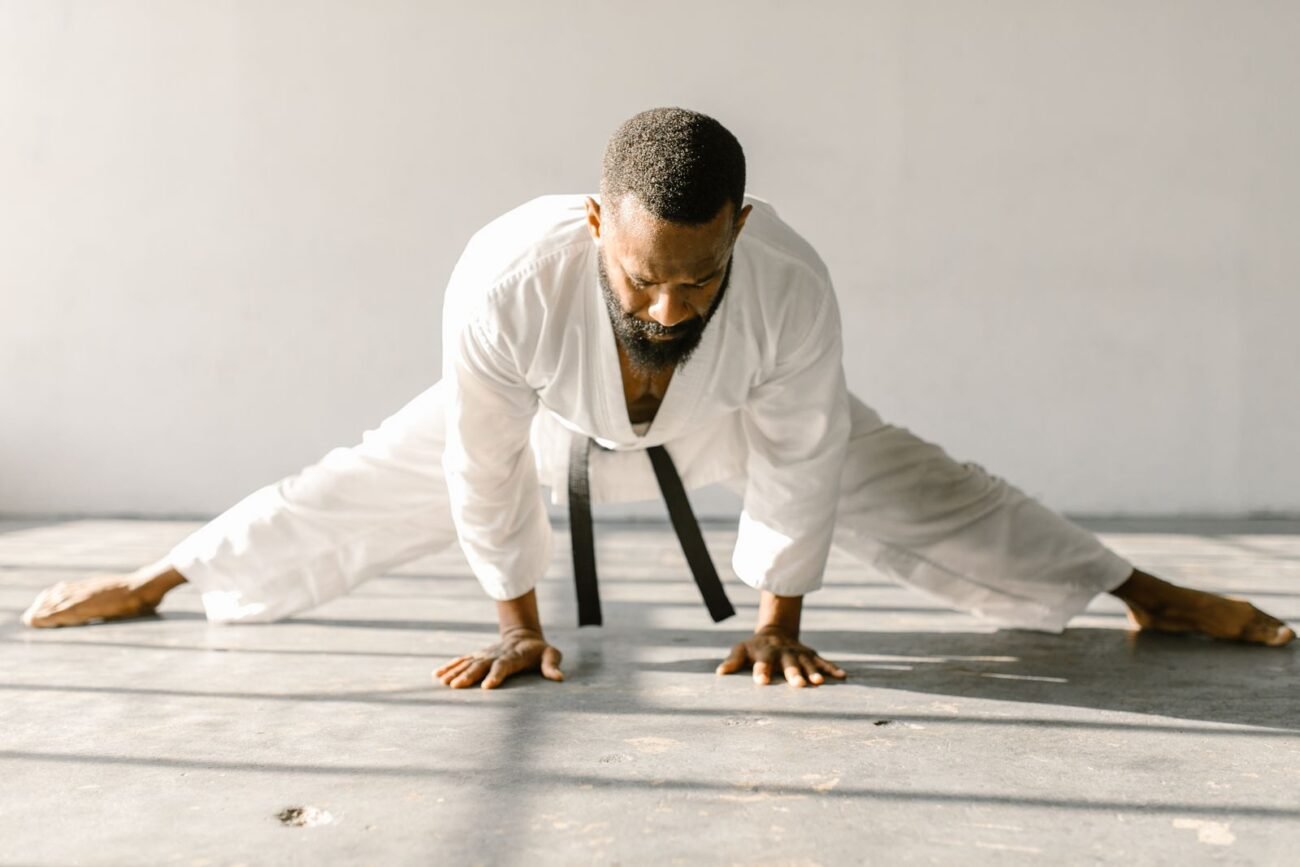
This guide was written and reviewed by Serge, MSc . As a martial artist and natural lifter with over 10 years of training experience, what I share comes from my own training and from digging into the research behind it.
Affiliate disclosure: This site has affiliate links, including Amazon. As an Amazon Associate I earn from qualifying purchases, at no extra cost to you.
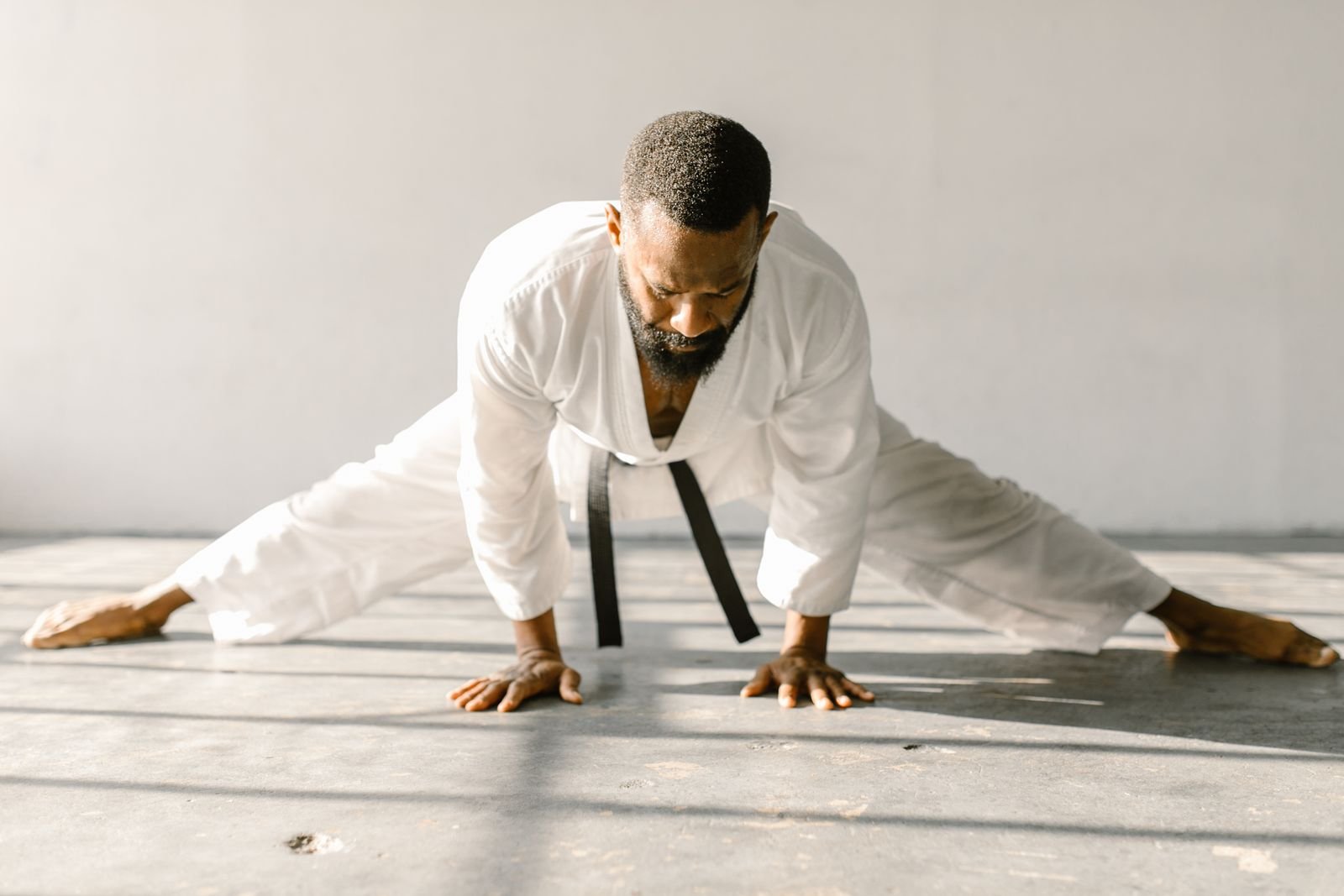
Can martial arts practice improve your mobility for lifting?
In my experience, yes. I have trained martial arts for over a decade, and one part of it, forms practice, is a big reason I move well in the gym.
Forms are set patterns of movements that you practice alone. In karate they are called kata.
This post covers how I practice them, what they did for my body and mind, and a simple routine any lifter can use.
How I Practice
I practice forms a few days a week. On rest days from lifting, I often do it at home.
Two of my best are Tekki Shodan and Enpi. I repeat the same movements many times, sometimes 20 times in a row. The repetition teaches the body exactly where to go.
It needs no equipment and very little space. That makes it easy to keep up, even in a busy week.
What It Did for My Mobility
The areas that improved most for me are my legs, shoulders and hips. Deep stances and repeated movements use these areas again and again.
This carries over to the gym. Moving through a full range feels natural to me. To work on the same areas, the Hip and Shoulder Mobility for Lifters guide covers them one by one.
For shoulder and neck tightness from desk work, see Neck and Shoulder Tension Relief.
What It Did for My Mind
Forms practice relaxes my mind. I focus on one movement at a time, and the rest of the day fades out.
It also helped me know myself better. I learned to stay calm under pressure and to face challenges with control. I do not feel the need to prove anything.
Lifters can use the same idea. Slow, focused practice builds awareness of your body, and that helps your lifting.
I Still Stretch Separately
Forms do not replace stretching for me. I stretch on its own as well.
In my experience, stretching improves range of motion and helps recovery. It also keeps stiffness away. If you do not stretch yet, start with the Beginner’s Home Stretching Routine or the Morning Mobility Routine.
You can also read staying flexible as a natural lifter and how to recover faster as a natural bodybuilder.
Stiff Does Not Mean Strong
A stiff body is often mistaken for a strong one. They are different things. A lifter who cannot move through a full range is limited, however big he looks.
Train for yourself, not to impress anyone. Mobility, control and steady practice will serve you for years.
A Simple 10 Minute Routine for Lifters
You do not need a dojo. This routine uses the same ideas: slow movement, full range and control. It is a general routine, not a program from my own training.
- Bodyweight squat with a pause. Do 8 reps and hold the bottom for 3 seconds.
- Wide, low stance hold. Hold for 20 to 30 seconds and breathe.
- Slow lunge with a hip stretch. Do 6 reps per side.
- Shoulder circles. Do 10 in each direction.
- Doorway chest stretch. Hold for 30 seconds.
- Hamstring stretch. Hold for 30 seconds per leg.
Do one or two rounds. Move slowly and stay within a range that feels comfortable. Stop if anything hurts.
How to Do Each Movement Well
Squat with a pause. Keep your feet about shoulder width apart. Sit down and back, keep your chest up, and let your knees follow the line of your toes. The pause at the bottom teaches you to control the position, not drop into it.
Wide, low stance hold. Stand with your feet wider than your shoulders, toes slightly out. Lower until your thighs are as deep as you can go with good form. Keep your back straight and your weight even on both feet.
Slow lunge with a hip stretch. Step forward and lower until both knees bend. At the bottom, tuck your hips under a little and feel the front of the back hip stretch. Do not rush back up.
Shoulder circles. Let your arms hang loose, then make big, slow circles. Keep your neck relaxed. This is for range of motion, not effort.
Doorway chest stretch. Place your forearm on a door frame with your elbow near shoulder height. Step through gently until you feel a stretch across the chest. Do not push into pain.
Hamstring stretch. Put one heel on a low step with your leg straight. Hinge forward from your hips with a flat back. You should feel it in the back of your thigh, not in your lower back.
When to Do It
I do forms practice a few days a week, including on rest days. You can follow the same idea. Do the routine two to four days a week.
On rest days, it works well as light activity. Before a workout, use it as a warm up and keep each movement easy. If your legs or hips feel tight after a long day of sitting, it helps there too.
Consistency matters more than length. Ten calm minutes a few days a week beats one long session every month. If you want to track it, the Training Log and 30 Day Planner has space for it.
Common Mistakes
The first mistake is rushing. The routine is slow on purpose. Fast, bouncy stretching can irritate a muscle that is not ready.
The second is forcing the range. You should feel a stretch, not sharp pain. Go a little deeper over weeks, not in one session.
The third is holding your breath. Breathe steadily through each movement. If you cannot breathe easily, you are pushing too far.
The fourth is skipping it when you feel fine. Mobility fades quietly. It is much easier to keep than to win back.
Who Should Be Careful
Go gently if you have a current injury, joint pain, or a medical condition that affects your balance or movement. People who are pregnant, or recovering from surgery, should ask their doctor first.
If any movement causes sharp or lasting pain, stop and do not repeat it. A doctor or physical therapist can tell you what is safe for you.
More to Read
If you want a home plan with simple equipment, the Dumbbell and Band Home Program is a good start. A tough sport background also helps, as I wrote in why starting with a challenging sport builds a better foundation.
The Short Version
Forms practice gave me better mobility in my legs, shoulders and hips, and a calmer mind. I stretch separately and keep both habits going.
You do not need martial arts to get these benefits. You need regular, focused practice.
This post shares my personal experience and is not medical advice. If you have an injury or a health condition, talk to a doctor or qualified coach before you change your training.
