


This guide was written and reviewed by Serge, MSc . As a martial artist and natural lifter with over 10 years of training experience, what I share comes from my own training and from digging into the research behind it.
Affiliate disclosure: This site has affiliate links, including Amazon. As an Amazon Associate I earn from qualifying purchases, at no extra cost to you.
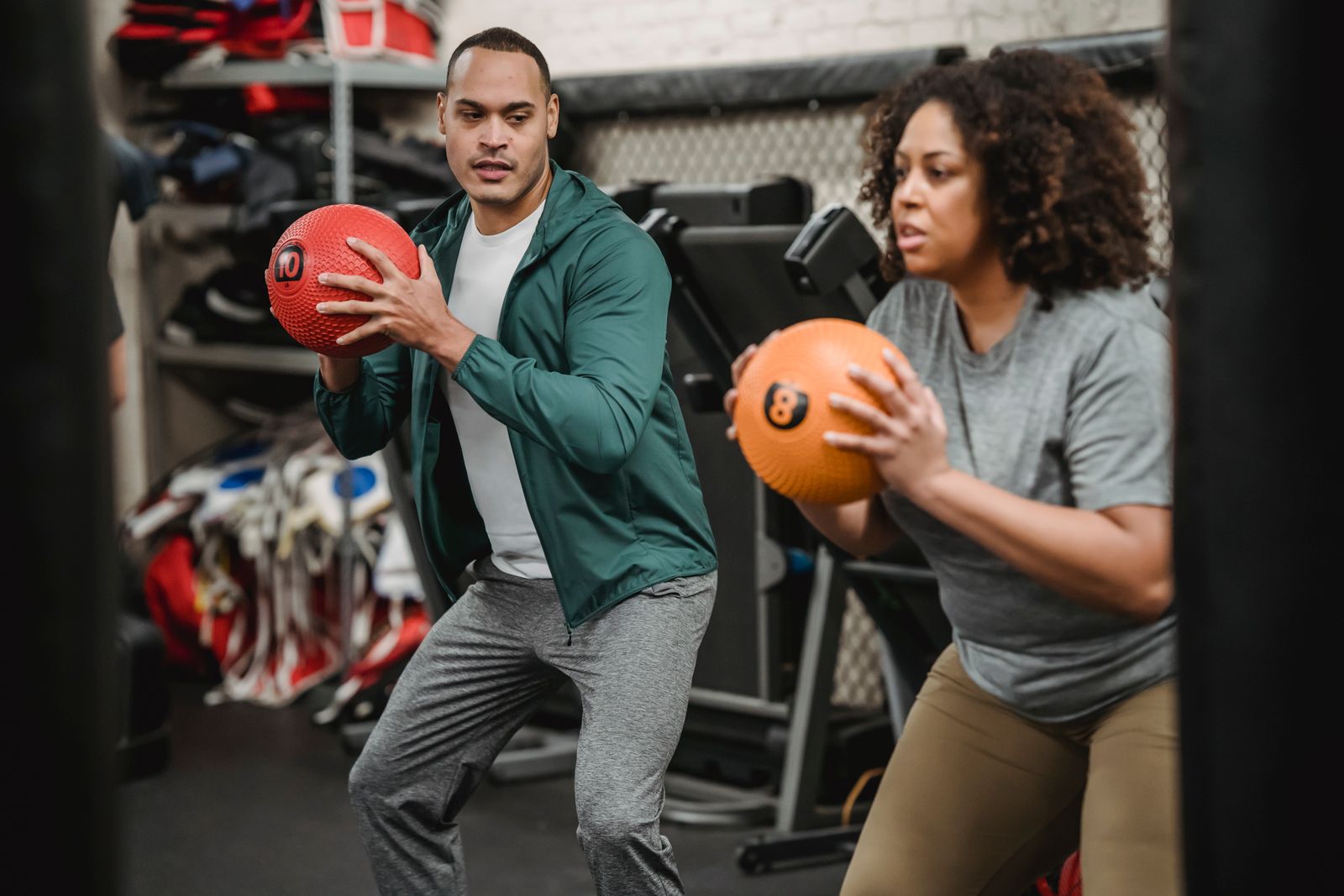
Slam balls make a plain workout faster and more fun. You lift the ball, slam it down, and your arms, legs, and core all work together.
The Yes4All Slam Ball is a sand-filled ball that does not bounce. In this article I explain how it differs from a medicine ball, how I would use it, and how to stay safe.
I also add a sample session and tell you who should skip it.
Slam Balls vs Medicine Balls
Medicine balls have been used in training for a long time to build power, balance, and coordination. They suit moves that copy real life, such as twisting, pushing, and throwing.
A slam ball is made to be thrown down hard. It is filled with sand, so it lands and stays there instead of bouncing back at you.
Medicine balls bounce more, so they suit lighter throws and catches with a wall or a partner. Slam balls suit slams, and also loaded squats and sit-ups. For the bigger picture, see my guide to the best exercises for strength and functional fitness.
Features of the Yes4All Slam Ball
Shell and Core
The Yes4All Slam Ball has a PVC shell and a sand-filled core, according to the listing. That design is meant to handle repeated slams without losing its shape.
I cannot promise how long any ball lasts. Check the shell for splits before each session, since a torn ball spills sand.
Textured Grip
The Yes4All Slam Ball has a grooved, textured surface, according to the listing. A better grip helps when your hands get sweaty during fast sets.
No surface is perfect, so wipe your hands if the ball feels slick. A dropped ball on a toe hurts more than you expect.
Sand-Filled Design
Because the Yes4All Slam Ball absorbs impact, it stays where it lands. That lets you reset between reps and keep your form tight.
The sand also shifts a little, so your core works to control the ball. That effect is modest. For real core training, see my guide to smarter core training for lifters.
Weight Options
The Yes4All Slam Ball comes in weights from 10 to 40 pounds, according to the listing. Check the product page for the sizes in stock.
Light balls of 10 to 15 pounds suit beginners and fast conditioning rounds. Mid-range balls of 20 to 30 pounds suit strength endurance, while 35 to 40 pounds is heavy for most people.
I started with a 10-pound ball and moved up to 20 pounds as my strength and confidence grew. That slow approach made my progress easy to measure.
How I Would Use It
What I like about the Yes4All Slam Ball is how many training styles it fits. You can use it for circuits, bootcamp-style work, or a simple strength day.
Cardio Intervals
With the Yes4All Slam Ball, slam for 30 seconds between lifting sets to keep your heart rate up. This is an easy way to mix lifting with cardio.
If you want the reasons behind that mix, read why you should combine weightlifting and cardio.
Strength Work
Use the ball in place of a dumbbell for goblet squats, lunges, or cleans. A ball is awkward to hold, so keep the weight light at first.
If you want a fixed weight with an easier grip, see my review of the neoprene dumbbell hand weights. For another swing-and-carry option, read about training with kettlebells.
Core Work
Hold the ball against your chest for sit-ups, Russian twists, and V-ups. The extra load makes basic moves harder without more gear.
For a different core tool, see my review of the Vinsguir ab roller wheel.
A Sample 15-Minute Session
This is a general example, not a program. Pick a light ball first, and stop a set when your form breaks.
Warm up for three minutes with arm circles, hip swings, and bodyweight squats. Then do overhead slams for 30 seconds and rest for 30 seconds, for five rounds.
Next, hold the ball at your chest for 3 sets of 10 squats. Rest about a minute between sets.
Finish with 3 sets of 12 Russian twists per side, then walk for a minute to cool down. Keep your back neutral on every rep.
For more no-gear ideas, read my 100 no-equipment workouts. You can also pair the ball with bodyweight training.
Safety and Limitations
Slam the ball on a firm surface that can take it. Concrete can chip and tile can crack, so a thick mat helps, and my review of the ProSourceFit puzzle mat covers one option.
Clear the space around you before every set. Throw only at a solid wall, never near windows, and keep pets and kids away.
Slams are loud, so think about neighbors below you. If you have a shoulder, back, or wrist problem, ask a doctor or physiotherapist first.
For more on safe form, read how to train safely and build strength without injury. My guide to using gym equipment properly also helps.
Who It Suits and Who Should Skip It
It suits people who like circuits, HIIT, and short, hard sessions. It also works in a garage, a park, or a small home gym.
Skip it if your main goal is maximum strength, since a barbell and plates load far heavier. Skip it too if you cannot slam without disturbing others.
For a different full-body tool, see my review of the TRX GO suspension trainer.
Summary
The Yes4All Slam Ball is a simple, sand-filled tool for slams, loaded squats, and core work. It adds variety without taking much space.
It will not replace heavy lifting, but it makes cardio intervals and core days more fun. Start light and use a surface that can take the impact.
This is general information, not medical advice. If you have an injury or a medical condition, ask your doctor before you start.
FAQs: Yes4All Slam Ball
What weight should I choose for a slam ball?
It depends on your fitness level. Beginners can start with 10 to 20 pounds, while more experienced users may prefer 30 to 40 pounds. Pick a weight that challenges you but still allows controlled movement.
How can I use a slam ball in my workouts?
Try overhead slams for power and cardio, wall throws for explosive effort, and squats or lunges for added load. Russian twists work the core, and chest passes with a partner add coordination.
Are slam balls the same as medicine balls?
Not exactly. Slam balls are made to be thrown down without bouncing, thanks to their sand-filled build. Medicine balls bounce more and are often used for lighter throwing and catching.
How can I clean and maintain my slam ball?
Wipe the surface with a damp cloth after each use. Avoid soaking it or using harsh chemicals, and store it in a cool, dry place.
Can slam balls be used in fitness classes?
Yes. They suit group workouts, HIIT sessions, and bootcamps, but make sure everyone has enough space.
Why does a slam ball not bounce?
It is filled with sand or a similar dense material, and the shell is soft. That keeps it from bouncing or rolling away after impact.
Are there different sizes or grip options?
The listing shows several weights, from 10 to 40 pounds. Check the product page for the sizes in stock and the surface texture.
Why do I like this slam ball?
I like the Yes4All Slam Ball for its simple build and its no-bounce design. It keeps slams and twists controlled, and it makes workouts more fun at home or in a gym.
