




This guide was written and reviewed by Serge, MSc . As a martial artist and natural lifter with over 10 years of training experience, what I share comes from my own training and from digging into the research behind it.
Affiliate disclosure: This site has affiliate links, including Amazon. As an Amazon Associate I earn from qualifying purchases, at no extra cost to you.

My first gym did not have a roof.
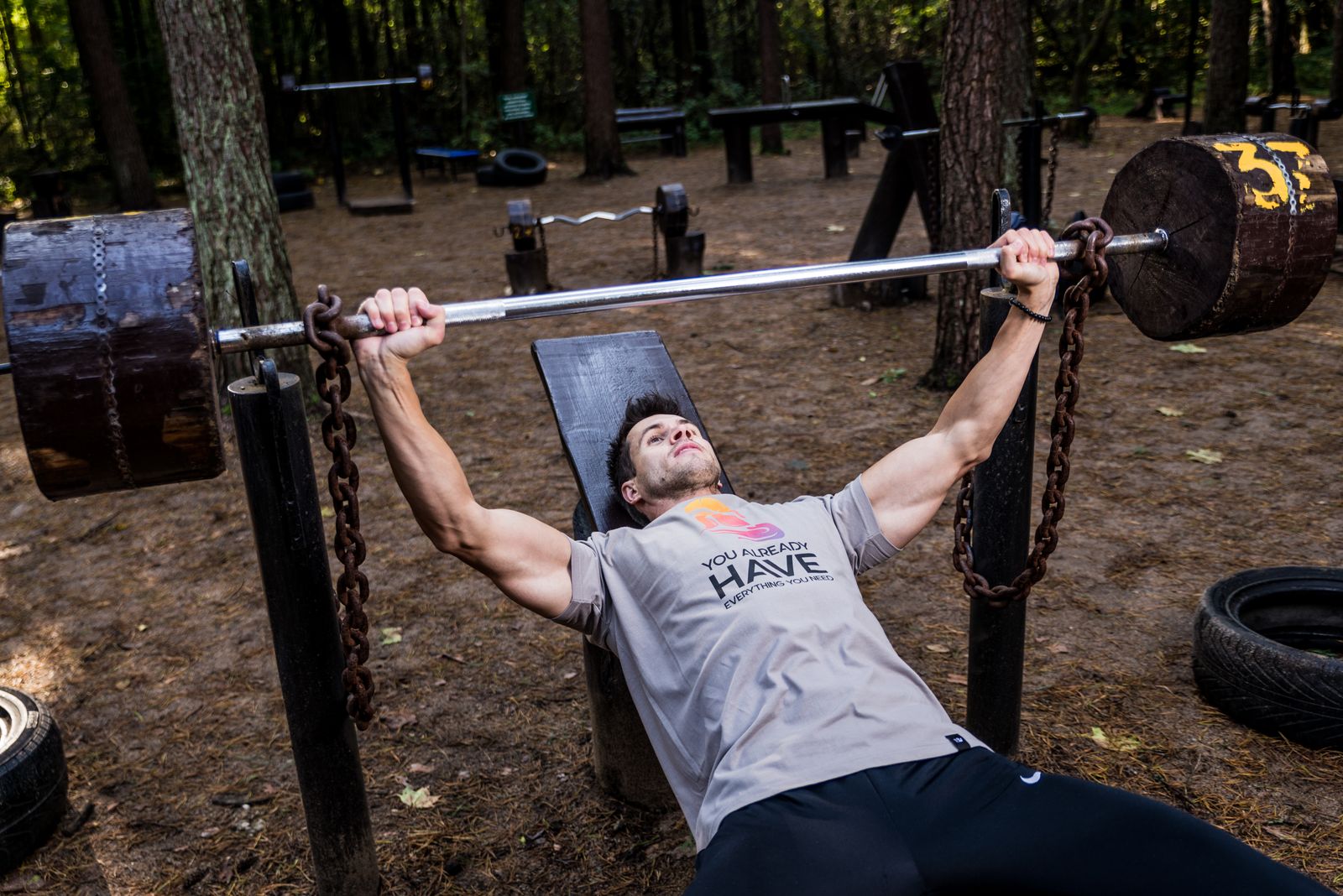
It was a pull-up bar at a basketball court, and a friend’s backyard where we had loaded up car parts to use as weights. Clutches, brake discs, bits of wood, whatever had weight and a shape we could hold. No membership, no machines, no coach standing over us.
I built a real foundation of strength there, long before I ever paid to walk into an actual gym.
I am telling you this because people give three common reasons for not starting. They have no money, no gym, or no one to show them what to do. I understand all three. I had none of those things either.
You can still begin, and begin well. This is how I did it, what went wrong, and where I would be careful today.
What Training With Nothing Actually Looked Like
The pull-up bar was the heart of it. I did pull-ups in every variation I could think of, wide, close, and with different grips, three to four days a week. Pull-ups are one of the best upper-body builders there is, and they cost nothing once you have something solid to hang from.
Alongside them came push-ups in high volume, which my martial arts background had already built up. The improvised weights from the backyard covered everything else.
Those car clutches and brake parts were not elegant, but weight is weight. Your muscles do not know whether they are lifting a chrome dumbbell or a brake disc. They respond to load and effort, and we gave them both. The setup was rough, but the training was real, and it worked.

If pull-ups are your goal, I created a Pull-Up Progress Calculator. You enter your best pull-up count and goal to see your training stage, weekly sets, and a rough timeline. For a step-by-step start, see my guide to getting your first pull-up at home.
Push-ups can get more interesting with a simple tool. I cover one in my post on boosting your fitness with push-up bars.
How I Learned, Mistakes Included
Nobody coached me. What I had was random videos online and a couple of friends to train with. We watched clips, picked up ideas, tried things, and shared what worked and what did not.
I will be straight about the downside: learning from random free videos meant I made mistakes. Some of what I copied was wrong, and I spent time on things that did not help. I also learned form the hard way.
That is the real cost of teaching yourself with whatever you can find. Training with friends helped a lot here. We could watch each other, compare notes, and catch some errors a solo beginner never sees.
If you are starting alone, know that you will get some things wrong, and that is fine. Good instruction, when you can find it, shortens the learning curve. Nothing replaces putting in the reps and paying attention to what your body tells you. I list my own slips in my post on 10 mistakes I made in my first year of lifting.
If You Want Structured Guidance Instead of Random Videos
The hardest part of teaching yourself, as I found out, is that free videos are a mixed bag. Some are good and plenty are wrong. As a beginner you cannot always tell which is which, and that is how I picked up mistakes early on.
If you would rather learn from something organized than from random clips, a structured video library can save you some trial and error.
One option is the Fitness Videos Pack. According to its sales page, it is a set of guided home workout video courses covering training, form, and programming. Judge it by what the page shows.
It is a paid subscription, not a one-off purchase. Check the current billing and cancellation terms on the sales page before you sign up.
So it suits someone who wants ongoing structured guidance. If that fits how you like to learn, it is a way to skip some of the guesswork I went through.
That said, it is a supplement to the work, not a shortcut around it. No video library replaces showing up and putting in the reps. It just helps you spend those reps on the right things sooner.
What You Need to Start
Less than you think. If you have something to do pull-ups on and enough floor for push-ups, you already have the core of an upper-body program. Add any kind of load you can hold safely, and you can train your whole body to a real standard.
The thing people get backwards is believing they need the full setup before they begin. You do not. You need to start, stay consistent, and add equipment as you outgrow what you have.
When improvised weights and bodyweight stop challenging you, that is the point to invest in something better. That could be a proper pull-up bar that does not wobble, a set of resistance bands, or adjustable dumbbells. Not before.

A Simple Bodyweight Week
This is a general example, not a program. Train three or four days a week, with a rest day between hard sessions.
Each session, pick one pull, one push, one leg move, and one core move. Pull-ups or hangs work for the pull, push-ups for the push, and squats or lunges for the legs.
Do 3 to 5 sets of each, and stop a rep or two before you fail. Rest about two minutes between sets. If you cannot do a pull-up yet, hang from the bar and lower yourself slowly.
For more ideas, see 100 no-equipment workouts. My post on getting ripped with bodyweight shows how far this style can go.
Staying Safe With Improvised Weights
Car parts worked for us, but I would not tell you to copy that. A backpack filled with books or a sand-filled bag is a safer pick.
Check anything you lift for cracks, rust, sharp edges, and loose parts. Choose objects with a solid place to grip, and start light.
Avoid overhead lifts with awkward objects, and train on a flat, dry surface. Check that your pull-up bar is firmly fixed before you hang from it.
Stop if you feel sharp pain. If you have an injury or a medical condition, check with a doctor first. This post gives general information and is not medical advice.
The Limits
I will not pretend bodyweight and backyard weights do everything forever. They build a genuine foundation, especially in the upper body, where pull-ups and push-ups carry you a long way.
But there is a ceiling. Legs in particular need real load to keep growing, and at some point bodyweight squats stop mattering for a strong person. Improvised weights also only go so far before they become awkward and limited.
So the path is this: start with nothing, build a real base, and graduate to proper equipment when you have earned the need for it. The no-money phase is not a compromise. It is where you prove to yourself that you will actually show up, before you spend a cent.
Who This Approach Suits and Who Should Skip It
It suits beginners with little money or space, and anyone who wants to test their commitment first. It also suits people who travel and want a plan that needs almost nothing.
Skip it if you have a medical condition that limits impact or hanging, until a doctor clears you. If you already have a gym and enjoy it, you do not need to give it up.
Where to Go From Here
If you are starting from zero, the best thing you can do is begin today with what you have, and let the equipment come later. When you are ready for that first real piece of kit, pick a solid pull-up bar or a set of resistance bands. That is a far more useful start than any machine.
For more on training without a gym, see my post on building muscle at home and what home training can and cannot do.
