





This guide was written and reviewed by Serge, MSc . As a martial artist and natural lifter with over 10 years of training experience, what I share comes from my own training and from digging into the research behind it.
Affiliate disclosure: This site has affiliate links, including Amazon. As an Amazon Associate I earn from qualifying purchases, at no extra cost to you.
Pull-ups were the first real strength exercise I ever owned. Long before I set foot in a proper gym, I had a bar fixed to a frame next to a basketball court, plus a friend’s backyard setup where cement filled car parts stood in for weights.
That bar taught me more about building an upper body than any machine did for years afterward. I learned the hard way, watching others, copying what worked, making plenty of mistakes, and slowly going from barely hanging on to pulling my chin over the bar clean. If you cannot do one yet, I have been where you are, and I can tell you it is a matter of when, not if.
This is a guide to getting your first pull-up and then building past it. It works whether you train at home on a single bar or in a full gym, because the pull-up does not care where you are, only that you keep showing up to it.
What the Pull-Up Really Trains
The pull-up is a compound movement, which means it works several muscle groups at once rather than isolating one. The main driver is the latissimus dorsi, the big fan-shaped muscle that gives the back its width. Your arms get heavily involved too, the brachialis and brachioradialis especially, which is part of why pull-ups build such strong, defined arms as a side effect.
Underneath that, a lot more is firing to hold you steady: the rhomboids and trapezius across the upper back, the deltoids at the shoulders, the smaller stabilizers around the shoulder blade, and your core working hard to stop your body swinging. That is the real value of the movement. It teaches the whole upper body to work as one unit.
There is a carryover benefit most people miss, as well. The grip strength you build hanging from a bar shows up everywhere else. On my heavy deadlift days I feel it directly, a grip earned on the pull-up bar holds on when the weight gets serious and most people’s hands give out. Few exercises give you that much for so little equipment.
Getting the Form Right
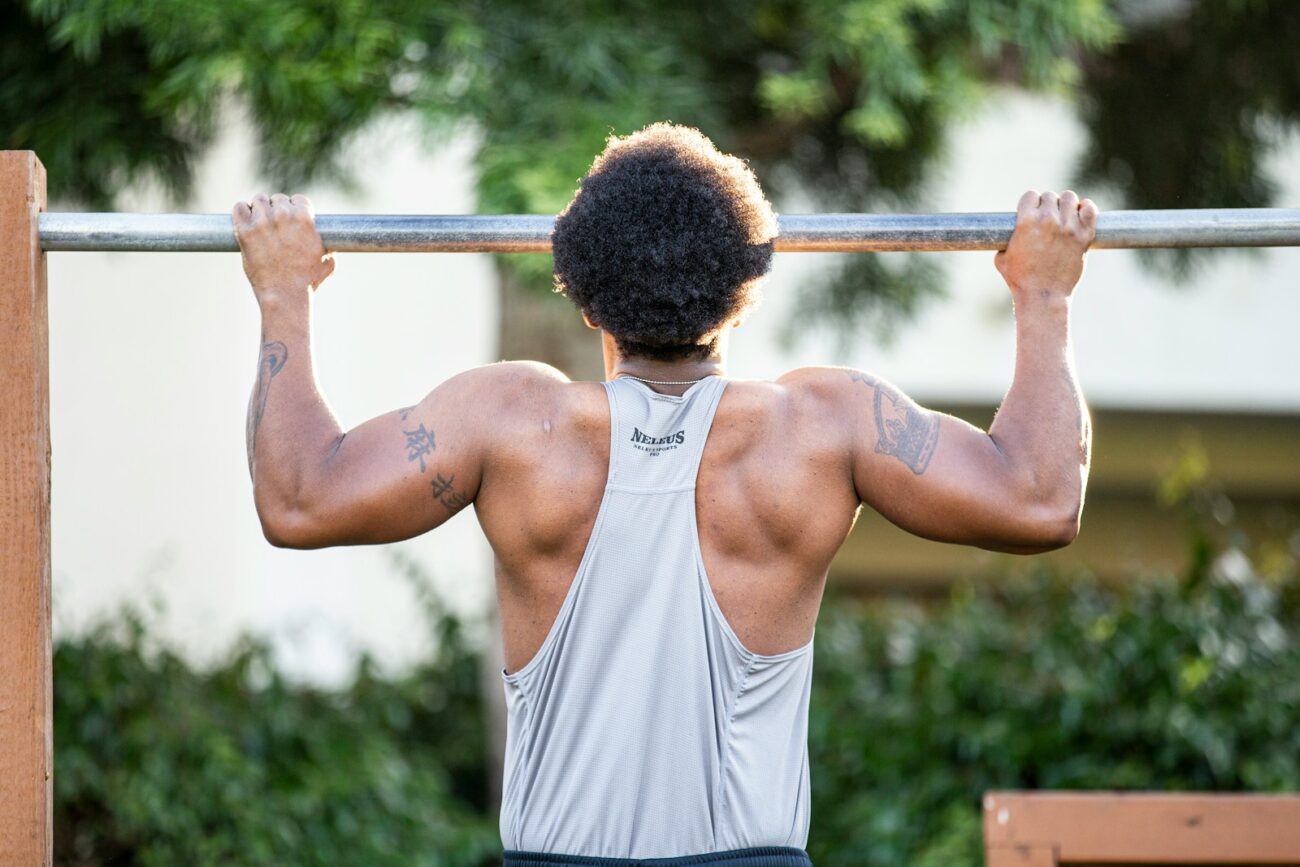
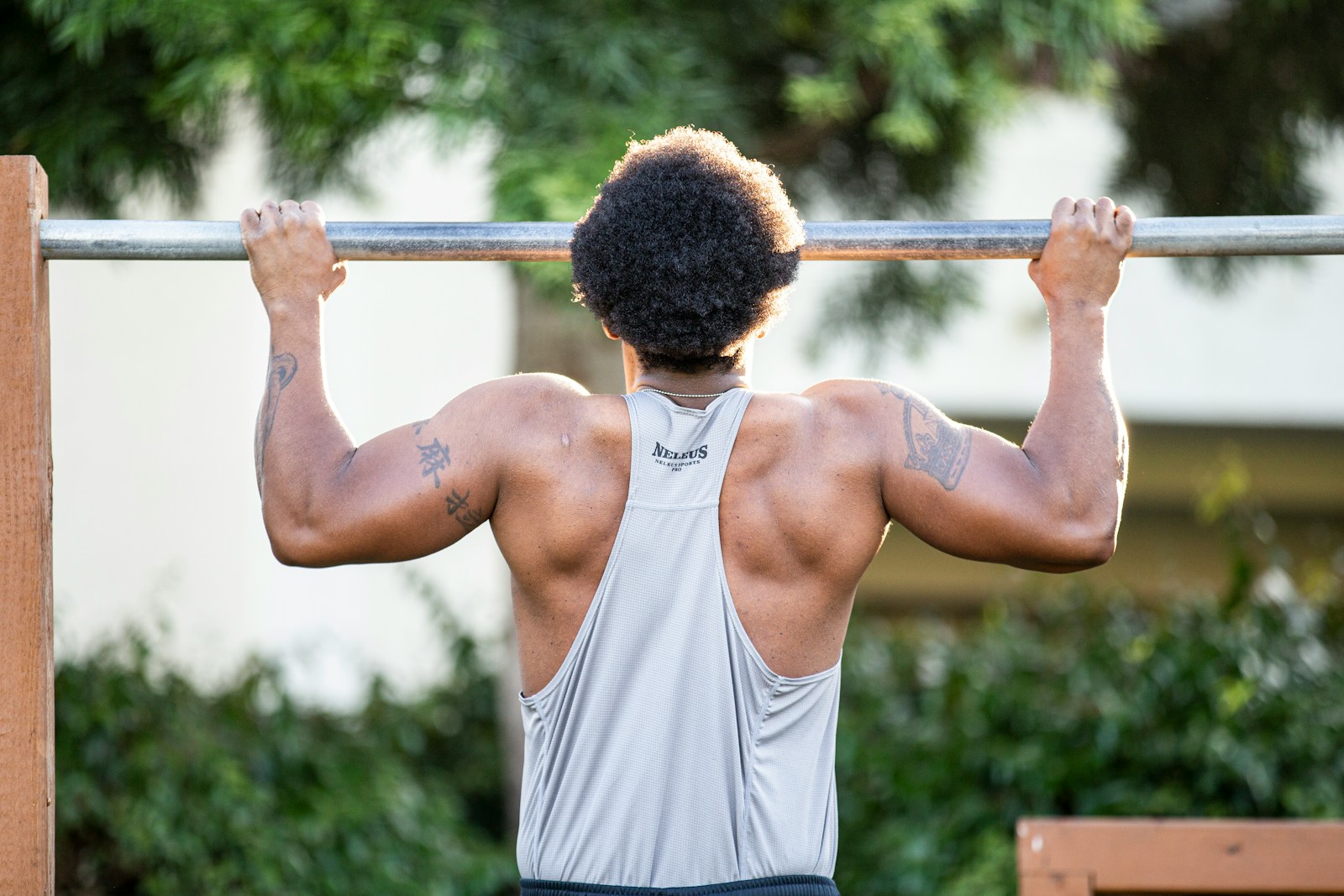
Good form is what separates a pull-up that builds you up from one that grinds your shoulders down. Start by gripping the bar a little wider than shoulder width, palms facing away. Hang with your arms fully straight, then set your shoulders by pulling your shoulder blades down and together before you move. That little setup matters, it puts the back in charge instead of letting the arms do everything.
From there, pull until your chin clears the bar, then lower yourself all the way back down under control. The lowering half is not a throwaway, it is where a lot of the strength is built, so resist the urge to drop. No kipping, no swinging, no using momentum to fling yourself up.
I learned to value clean reps over big numbers the hard way, on the barbell lifts, where chasing weight I was not ready for burned my technique and taught me that form beats ego every time. The same rule holds on the bar. Five clean pull-ups are worth more than ten sloppy ones, and they keep your shoulders healthy while you build.
Breathe with the movement rather than holding your breath. Exhale as you pull up, inhale as you lower. It keeps you braced and steady and helps you squeeze out cleaner reps.
How to Get There From Zero
Not being able to do a pull-up yet is the normal starting point, not a problem. The mistake I see is people thinking the only path is hanging a band on the bar and calling it a day. Bands have their place, but leaning on them alone holds a lot of capable people back, because the band does the most work exactly where you are weakest, at the bottom.
A better approach mixes a few tools. Slow negatives are the big one: jump or step to the top position with your chin over the bar, then lower yourself as slowly as you can, fighting gravity the whole way.
Your body is stronger lowering than lifting, so this builds real pulling strength fast. Add dead hangs to build grip and shoulder stability, and rows to strengthen the same pulling pattern from a different angle. Bands can supplement all of that, just do not let them be the whole plan.
Once you have your first rep, the game becomes adding more. Increase your reps, add sets, shorten your rest, and when bodyweight gets easy, a weighted vest or a dumbbell between the feet keeps it challenging.
Playing with grips, wide, close, neutral, even chin-ups with the palms facing you, hits the muscles a little differently and keeps progress coming. Go at your own pace and let consistency do the heavy lifting. Strength on this movement comes in steady steps, not overnight.
Why Training Pull-Ups at Home Works So Well
A pull-up bar is one of the best value buys in all of fitness. The biggest advantage is simple: it is right there. No commute, no waiting for equipment, no excuses, just walk up to the bar whenever you have a few minutes. That convenience is what turns pull-ups into a habit instead of an occasional gym exercise.
It is also cheap compared to a gym membership. One bar, bought once, gives you unlimited training for years. And there is something to be said for working out at home with no audience, no self-consciousness, just you and the bar and the work. For a lot of people, especially early on when they cannot do a rep yet, that privacy is exactly what they need to keep at it.
Pull-ups slot into almost any routine, too. Full body day, upper body day, back day, they fit. I like to put them early in a session when my energy and grip are freshest, because a tired grip will cap your pulling before your back is done.
If You Want a Structured Plan
Piecing your own progression together works, it is how I learned, but it takes patience and a willingness to make mistakes along the way. These days pull-ups are one of my easier exercises.
They were the very first thing I trained when I started out, so after all these years they have become almost like cardio for me, which is why I spend my time on weighted pull-ups and more advanced variations rather than a first-rep program.
That is also why, if you are starting out, I am pointing you to a structured plan rather than telling you to copy what I do now. If you would rather follow a step-by-step system built by someone who specializes in getting beginners their first rep, the Ultimate Pull-Up Program is one to look at.
From what I have seen of it, it is thorough and progression-based, taking people from their first pull-up up to advanced variations, with a focus on technique and full-body strength rather than just cranking out sloppy reps. If you want a clear plan to follow instead of figuring it all out yourself, it is worth a look.
My Pull-Up FAQ
Do I need to be able to do a pull-up already to start?
No. The whole point of progressions like negatives and dead hangs is to build the strength for your first rep. You start exactly where you are.
How often should I train pull-ups?
Two to four focused sessions a week is plenty for most people. Pulling is demanding on the grip and elbows, so give yourself recovery between hard sessions rather than hammering it daily.
How long until I get my first one?
It depends entirely on your starting strength, bodyweight, and consistency, so I will not promise a number. Some people get there in weeks, others in months. Steady work is what gets you there, not a deadline.
Are chin-ups easier than pull-ups?
For most people, yes. The underhand chin-up grip brings the biceps in more, so it is often a good place to earn your first rep before moving to the overhand pull-up.
Can I really build a pull-up with just a bar at home?
Yes. A single bar plus your own bodyweight covers the whole journey from zero to multiple reps. A band or a vest is a nice extra, but the bar is the only thing you truly need.
