




This guide was written and reviewed by Serge, MSc . As a martial artist and natural lifter with over 10 years of training experience, what I share comes from my own training and from digging into the research behind it.
Affiliate disclosure: This site has affiliate links, including Amazon. As an Amazon Associate I earn from qualifying purchases, at no extra cost to you.

When I first stepped into weight training, I had no membership, no machines, just a bit of floor space and my own body.
Years before that, I trained in Shotokan karate, earning my black belt through discipline, repetition, and focus. Moving to building muscle felt like a new world, but I quickly learned a simple truth: muscle responds to how you train, not to where you train or what equipment you own.
So can you build muscle with little or no equipment at all? Yes. But there’s one honest catch most people skip over, and I’ll get to it. Let me walk you through exactly how I’d do it with almost nothing.
Why You Don’t Need Equipment to Start
Muscle grows when it experiences enough tension to signal the body to repair and get stronger. That tension doesn’t care whether it comes from a machine or your own bodyweight.
I learned this for myself early on. I’ve trained with nothing but floor space and makeshift gear and made real progress, while I’ve watched people in fully equipped gyms use every machine and barely change. Equipment alone doesn’t build muscle. Effort, progression, and consistency do.
For most of your body, your own weight is all you need to begin. The trick is knowing how to make it hard enough.
The Bodyweight Moves That Cover Most of Your Body
With zero equipment, most muscle groups are easy to hit:
Chest, shoulders, triceps: push-ups, and dips off a sturdy chair. Push-ups alone have endless variations to keep them challenging.
Legs and glutes: squats, lunges, split squats. These hit the biggest muscles in your body and need no equipment at all.
Core: planks, and their variations.
Those moves alone, done with real effort and progression, will build muscle, especially when you’re starting out.
How to Make Bodyweight Exercises Harder Without Weights
This is where most people go wrong. They do the same 20 push-ups forever and wonder why nothing changes. Your body adapts fast, so you have to keep raising the challenge. Here’s how I do it without adding any weight:
Slow the reps down, especially the lowering part, so the muscle stays under tension longer.
Pause at the hardest point of the movement, for example at the bottom of a push-up or squat.
Elevate your feet on push-ups to shift more load onto your chest and shoulders.
Move toward single-leg and single-arm versions, like split squats and eventually pistol-style squats, which load one limb at a time.
Shorten your rest periods to keep the intensity high.
Any one of these turns an easy exercise into a hard one. You don’t need more weight. You need more challenge.
The Real Problem: Training Your Back With No Equipment
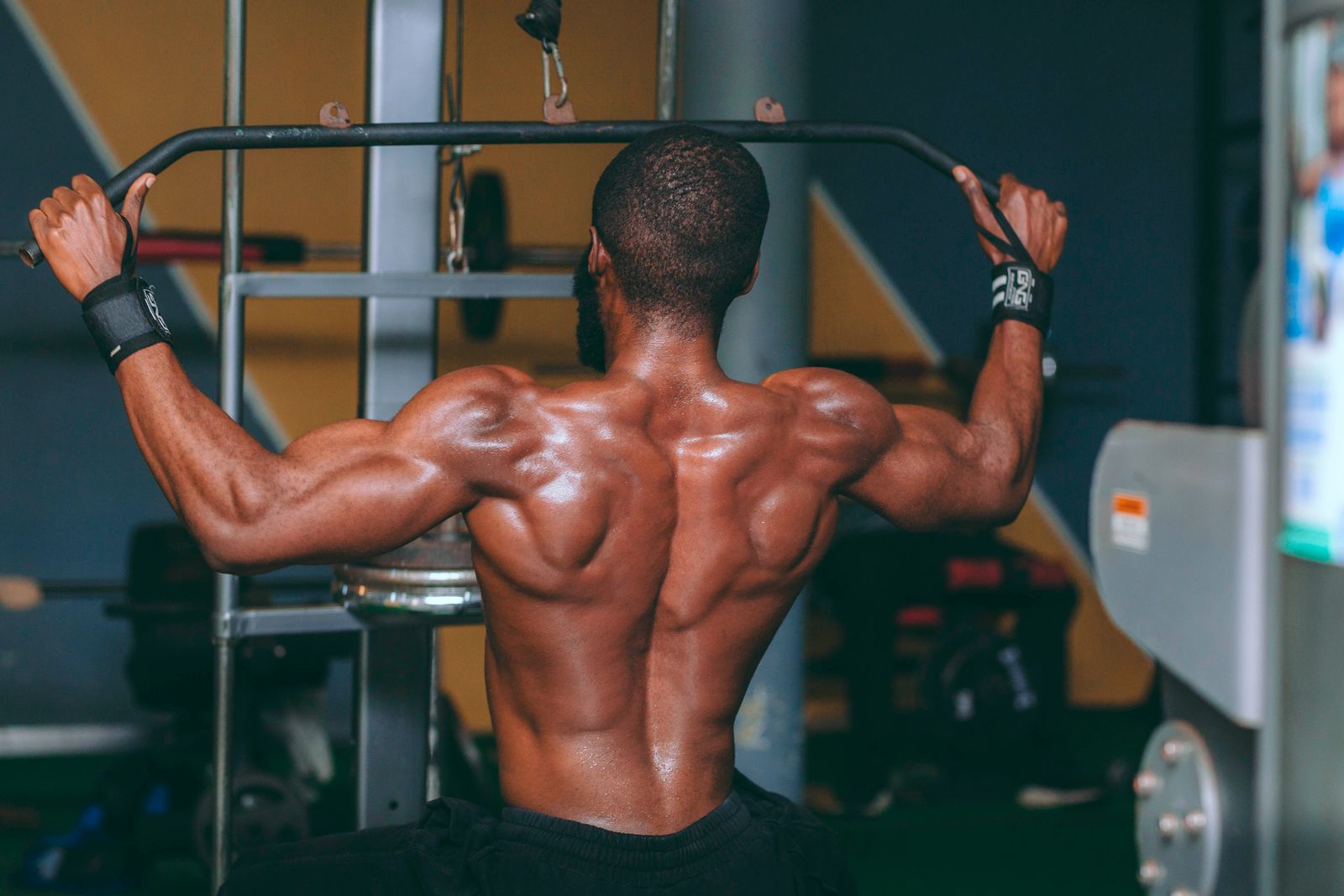
Here’s the catch I mentioned. Most muscles are easy to train with nothing, but your back and pulling muscles are the genuine weak spot of pure bodyweight training. Pulling movements need something to pull against, and the floor doesn’t give you that.
A lot of “no equipment” guides quietly skip this. I won’t, because ignoring your back leaves you unbalanced and is a recipe for posture and shoulder problems.
So here’s what I actually do when I have no proper gear. I improvise weights from what’s in the house. Two water bottles of the same size make a balanced pair for rows and curls. Even better, the big 5-litre bottles with handles are perfect, because you can actually grip them and row, pulling them toward your body to work your back the way a dumbbell row would.
It’s not glamorous, but it works. You’re giving your back something to pull against, which is exactly what it needs.
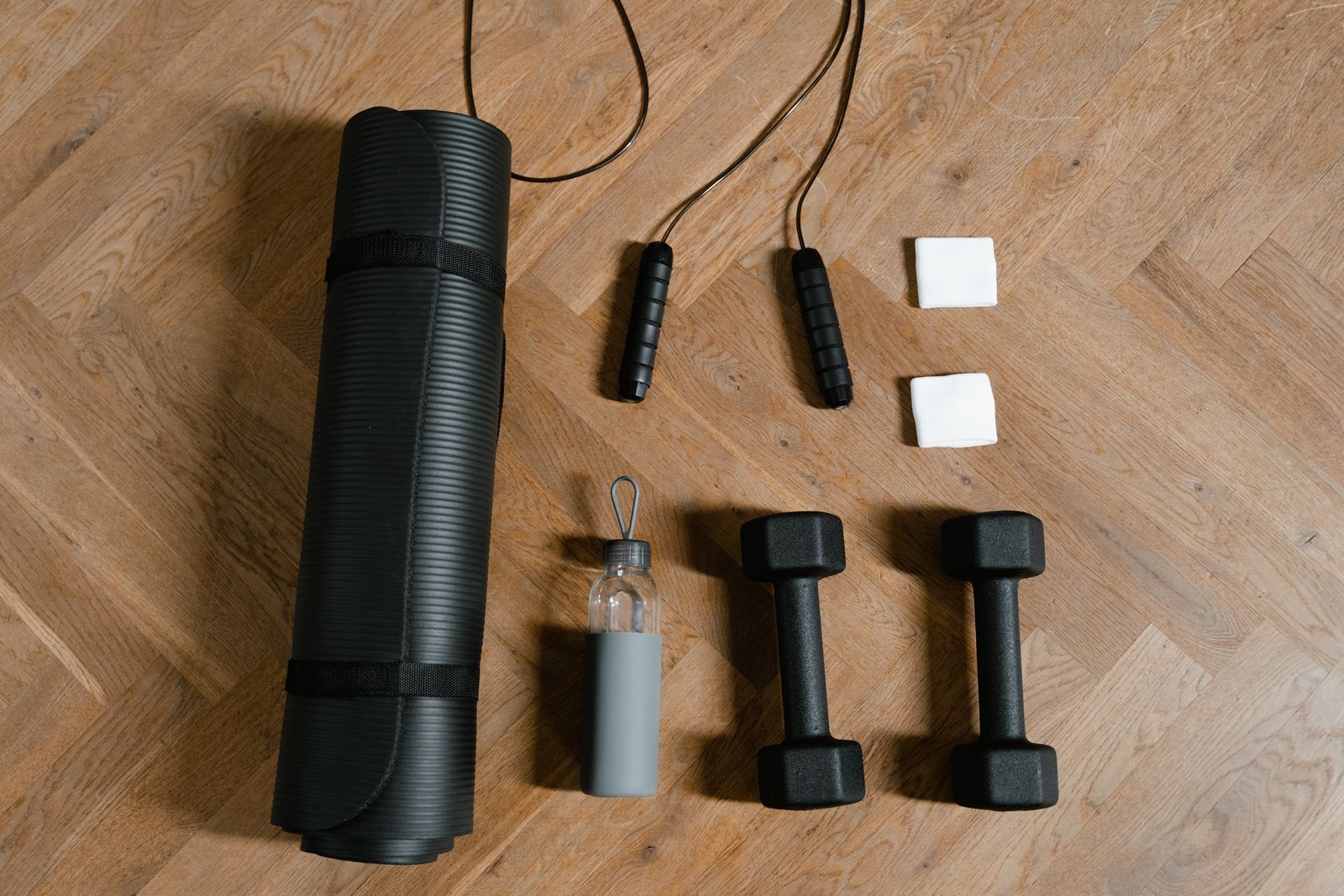
This is the one area where a single cheap piece of equipment makes life much easier. A basic resistance band costs little, takes up no space, and solves the pulling problem cleanly, letting you do rows and pull-aparts properly. If you’re going to buy one thing for home training, a band is the one I’d get first, precisely because it fixes the back-training gap that bodyweight alone can’t.
Applying Progressive Overload at Home
Progressive overload is the key to growth, and it doesn’t need weight machines. At home it looks like adding reps, adding sets, slowing your tempo, shortening rest, or combining exercises into back-to-back supersets.
For example, if you can comfortably do twenty push-ups, add one more each week, slow them down, or elevate your feet. The exercise has to keep getting harder, or your body stops adapting.
Tracking matters here. Without it, it’s easy to drift and do the same workout for months. A simple note of your reps, sets, and tempo is enough to make sure you’re actually progressing.
A Simple No-Equipment Weekly Plan
You don’t need anything complicated. A full-body approach a few times a week works well:
Train major muscle groups two to three times per week. Push (push-ups, dips), legs (squats, lunges), pull (bottle or band rows), and core. Add mobility or easy movement on the days in between, and rest when you need it.
The goal is effort plus consistency, not a complicated routine. Two or three focused sessions a week, with the challenge slowly increasing, is enough to grow.
Common Mistakes With No-Equipment Training
Doing the same exercises at the same difficulty forever, so the body never has a reason to adapt. Skipping the back entirely because it’s awkward without gear, which leaves you imbalanced. Rushing reps instead of controlling them. And neglecting recovery and food, because muscle is built during rest, not just during the workout.
Fix those, and a no-equipment setup will take you a lot further than people expect.
Conclusion
You don’t need a gym, and you barely need any equipment, to build real muscle. Bodyweight covers most of your body if you keep making it harder. The one honest exception is your back, where a couple of water bottles, or one cheap resistance band, fills the gap cleanly.
Start simple. Hit every muscle group, including the back. Increase the challenge over time, eat enough to support it, and rest. Your home, with almost nothing in it, can be a real training ground.
Begin today, and let consistency do the rest.
FAQs
Can I build muscle with bodyweight exercises alone?
For most muscle groups, yes, especially as a beginner, as long as you progress by slowing reps, adding pauses, and moving to harder variations. The exception is your back, which is hard to train well without something to pull against.
How do I train my back with no equipment?
Improvise. Rows with two equal water bottles or large handled jugs work, and a cheap resistance band makes it much easier. Pure bodyweight struggles to hit the back properly, so this is the one area worth improvising or getting minimal gear for.
Do I need dumbbells or bands to see results?
Not to start. Bodyweight builds real muscle, particularly for beginners and intermediates. But a single band is genuinely worth it for training your back and pulling muscles, which bodyweight alone can’t cover well.
How often should I train with no equipment?
Two to three full-body sessions per week, hitting all major groups, with rest days between. Recovery is when the muscle actually grows.
How do I keep progressing without adding weight?
Increase reps, slow your tempo, add pauses, elevate your feet, move to single-limb versions, or shorten rest. Track it so you know you’re actually getting harder over time.
