



This guide was written and reviewed by Serge, MSc . As a martial artist and natural lifter with over 10 years of training experience, what I share comes from my own training and from digging into the research behind it.
Affiliate disclosure: This site has affiliate links, including Amazon. As an Amazon Associate I earn from qualifying purchases, at no extra cost to you.
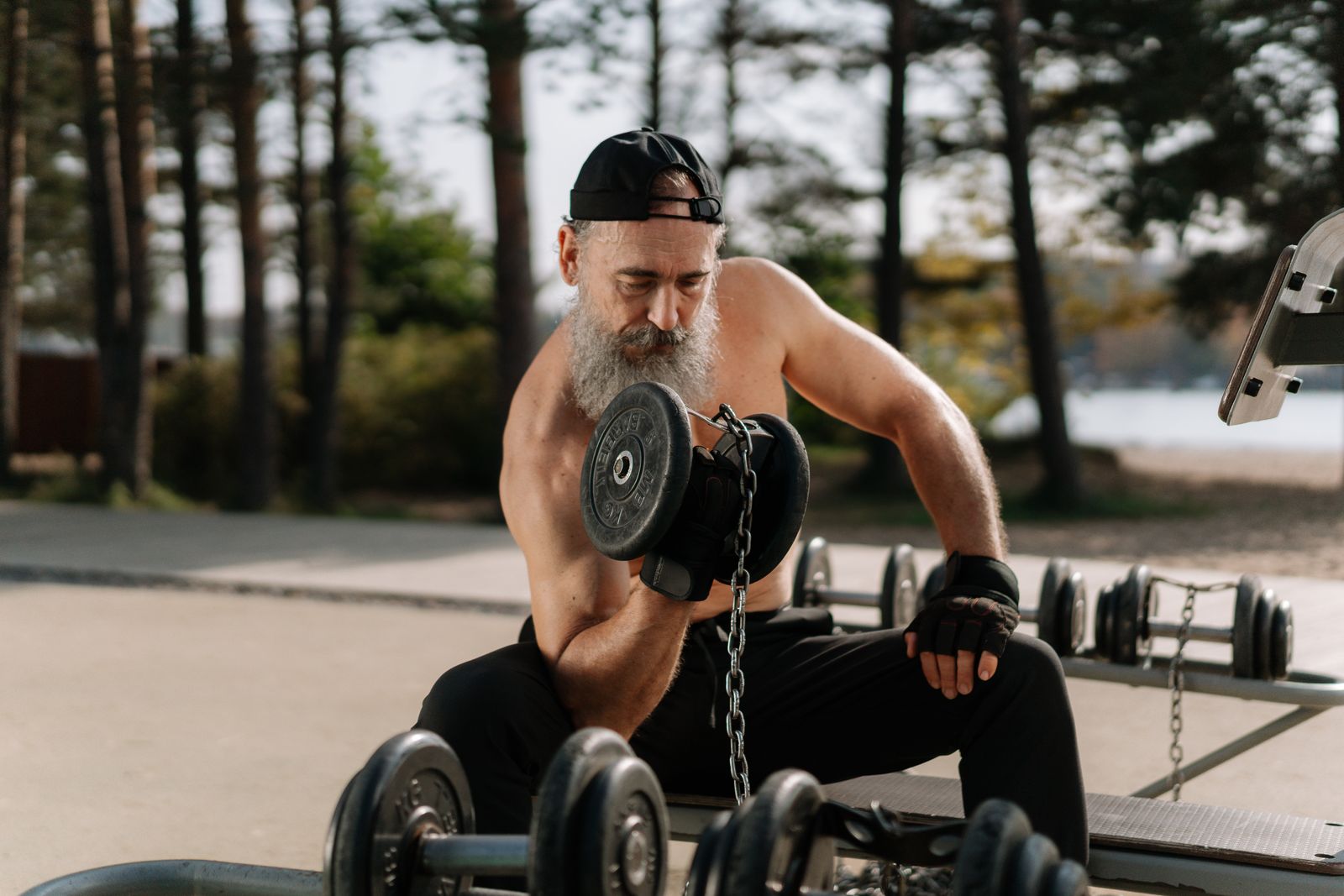
Time changes how you train, or at least it should. The body you have at fifty is not the body you had at twenty, and trying to train it the same way is how a lot of older lifters end up hurt instead of strong.
I learned a version of this lesson young, chasing weights my body was not ready for and paying for it with my technique and my joints. The principle only matters more with age: train smart, protect the joints, and you can keep building strength for decades.
This is about muscle and aging, why you lose it, why that matters more than most people realize, and how to keep building it safely as the years add up. It is also about a program built specifically for older men who want to do exactly that, for anyone who wants a structured plan to follow.
Muscle Loss Is Real, But It Is Not a Dead End
There is a natural process called sarcopenia, the gradual loss of muscle that begins quietly in your thirties and picks up pace through your forties and fifties. It is why arms look less firm over time, why the legs feel weaker on the stairs, why energy does not come as easily as it used to. It is normal, and it happens to everyone who does nothing about it.
Here is the encouraging part, and it is well established: muscle responds to training at any age. You can slow that decline, and you can rebuild a good deal of what has slipped, with the right kind of strength work and sensible eating.
The body does not stop responding to training because a birthday passed. It keeps adapting for as long as you keep asking it to.
Why Muscle Matters More As You Age
It is easy to think of muscle as a young man’s vanity project, but it is one of the most useful things you can hold onto as you get older. Muscle is what carries you up stairs, lifts what needs lifting, and keeps you steady on your feet. It supports your posture and takes load off your joints.
Keeping muscle is really about staying capable and independent. The stronger and more mobile you are, the longer you can do the things you want to do under your own steam, play with grandkids, carry the shopping, head out for a hike, without feeling fragile. That is worth far more than how it looks in a mirror, though looking stronger tends to come along for the ride.
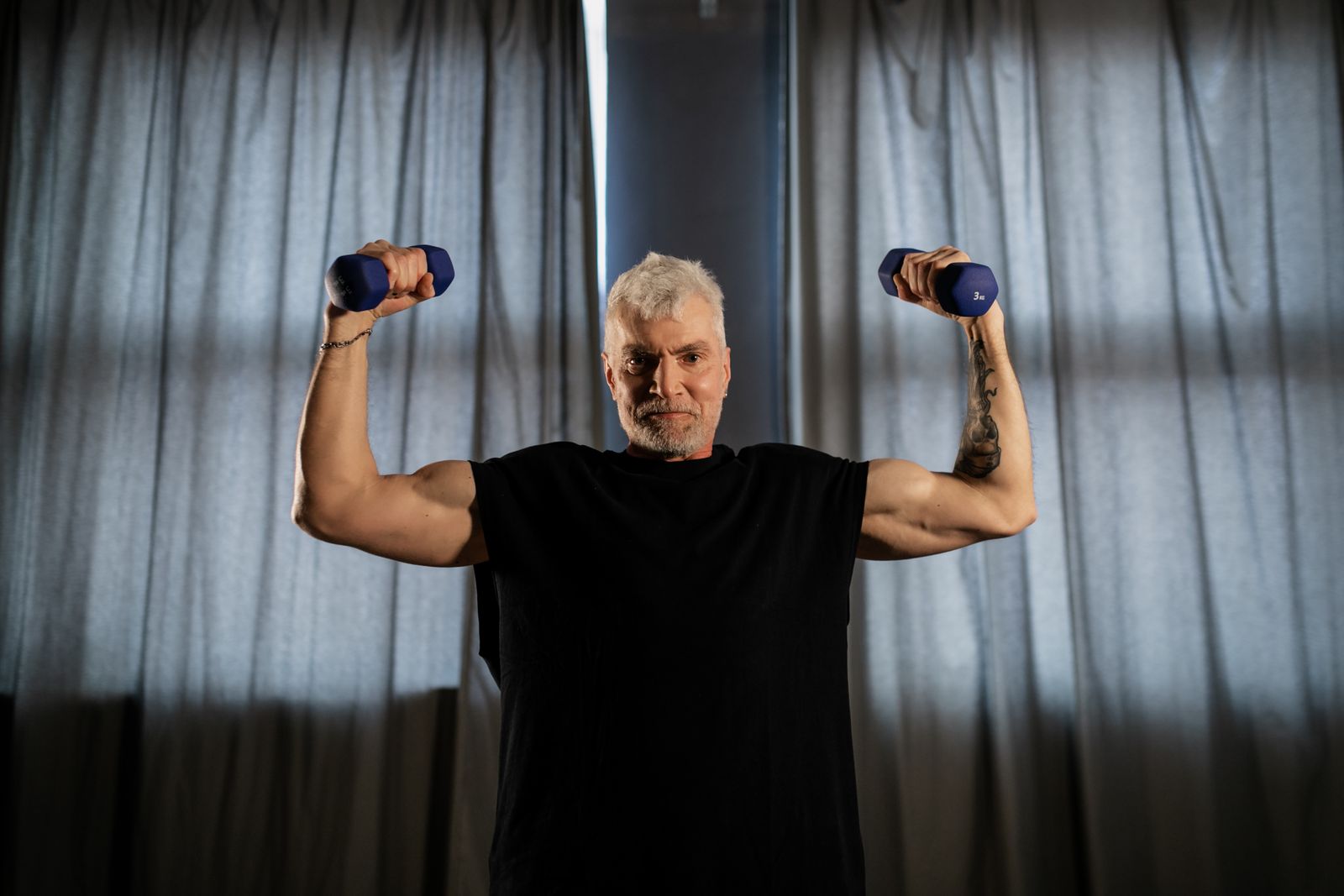
Train Smarter, Not Harder, As You Get Older
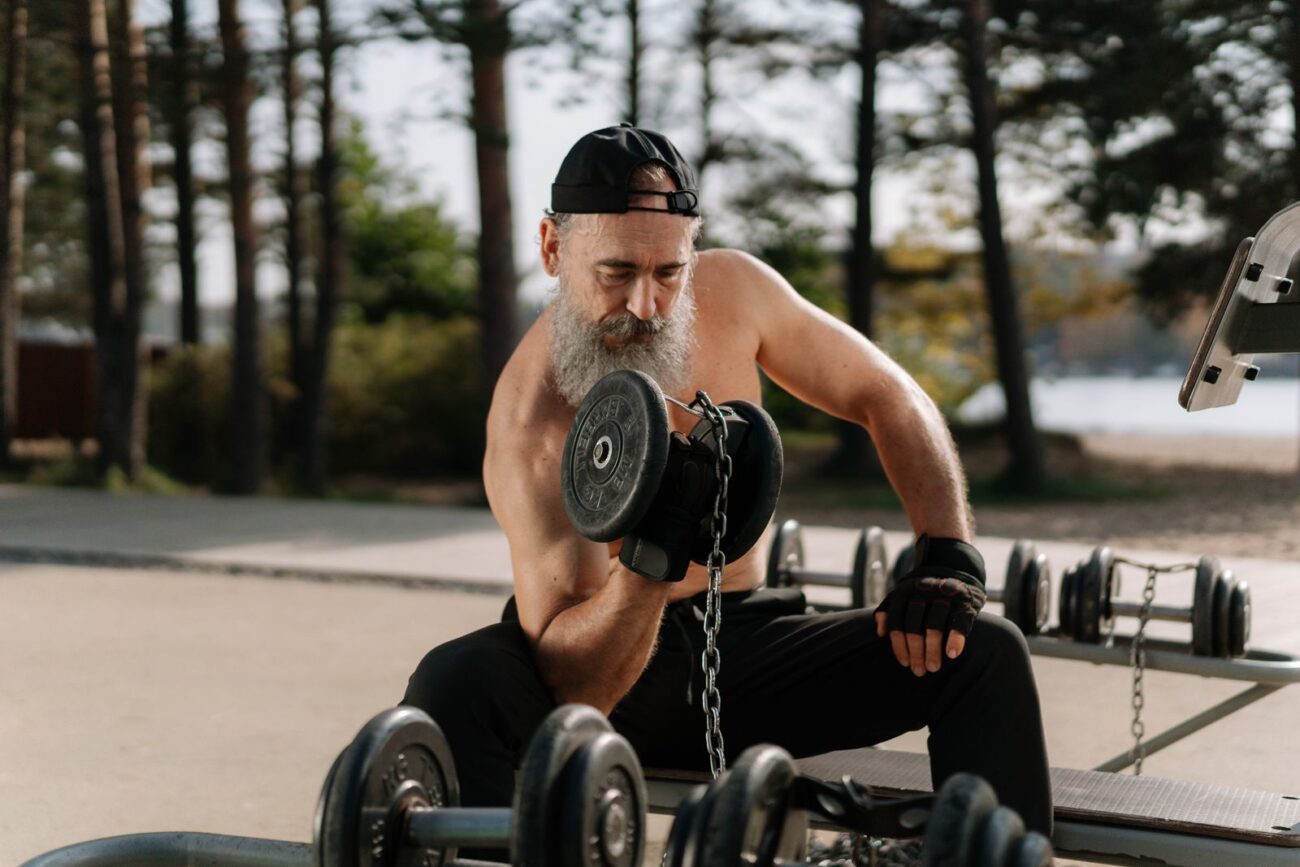
This is the part I feel strongest about, because it matches everything I have learned in my own training. When you are older, training smart beats training hard. Grinding away with the heaviest weights you can manage, the way some of us did in our twenties, is a fast route to aching joints and injuries that set you back for weeks.
The better path is efficient, joint-friendly strength work. You do not need marathon sessions or punishing loads. You need the right movements, done with good form and real consistency, enough to challenge the muscle without beating up the joints.
Moderate weights, controlled reps, and smart exercise choices build plenty of strength while keeping you in one piece. I have always believed form beats ego and that mobility is what lets you keep training for the long haul, and that belief only gets more important with age, not less.
If you want the fuller picture on holding onto muscle through the years, I wrote more about it in my article on preserving muscle mass as you age. It pairs well with everything here.
A Word on Results and Diet
I will be straight, the same way I am in everything I write. You will see programs aimed at older men promising fast, dramatic transformations and specific fixes for this hormone or that condition. I am not going to repeat those claims.
Real, drug-free progress at any age depends on your starting point, your effort, and your consistency, and it does not run to a guaranteed schedule.
What is true is simpler. Strength train sensibly, eat well, and stay consistent, and you will get stronger, hold onto more muscle, and feel more capable over time. Nutrition matters more as you age, but that does not mean extreme rules.
I am not going to prescribe a diet or fasting plan, because that is personal and best worked out with your own doctor if you have health considerations. Eat sensibly and train consistently, and the results take care of themselves at whatever pace is right for you.
If You Want a Structured Program for Older Lifters
Putting your own age-appropriate plan together is doable, but it takes knowledge and trial and error. If you would rather follow a ready-made plan built specifically for older men, Old Man, Young Muscle is one to look at. It was created by Steve Holman, a longtime fitness-industry figure and former editor of Iron Man magazine, who built his own physique in his sixties using short, moderate-weight, joint-friendly home workouts.
The program is built around exactly the philosophy I hold: brief, efficient sessions, sensible exercise selection that spares the joints, and moderate weights rather than punishing loads, all trainable at home with basic equipment.
I am pointing you to it as a program that lines up with how I believe older lifters should train, rather than from personal use, since I build my own training. But the approach behind it is sound, and if you want structure built for your stage of life instead of piecing it together yourself, it is a solid place to start.
I may earn a commission if you buy through this link, at no extra cost to you.
Muscle and Aging FAQs
Can older men really build muscle?
Yes. Muscle responds to training at any age. Progress may come a little slower than it did in your twenties, but with consistent, sensible strength work and good nutrition, men in their forties, fifties, and sixties can build real strength and hold onto muscle.
Do I have to lift heavy to build muscle as I age?
No, and for many older lifters that is the wrong approach. Moderate weights with good form, controlled reps, and smart exercise choices build plenty of strength while sparing the joints. Training smart matters more than training heavy as you get older.
Is strength training safe for aging joints?
Done sensibly, yes, and it often helps. Choosing joint-friendly movements, warming up, using moderate loads, and progressing gradually lets you build strength without the wear that heavy ego-lifting causes. If you have an existing condition or injury, check with your doctor before starting.
How often should an older lifter train?
For most people, two to four focused sessions a week is plenty, with recovery between them. Recovery takes a little longer as you age, so smart, consistent training beats hammering yourself daily.
How long until I see results?
That depends on your starting point, effort, and consistency, so I will not give you a number. With regular training and sensible eating, most people start to feel stronger and more capable over a span of weeks to a few months. Steady work is what gets you there.
Is it ever too late to start?
No. Whether you are in your forties, fifties, or sixties, your body can still respond to proper training. The sooner you start, the more muscle you protect, but starting at any age beats not starting at all.
