








This guide was written and reviewed by Serge, MSc . As a martial artist and natural lifter with over 10 years of training experience, what I share comes from my own training and from digging into the research behind it.
Affiliate disclosure: This site has affiliate links, including Amazon. As an Amazon Associate I earn from qualifying purchases, at no extra cost to you.

In over ten years of heavy natural lifting, I’ve never had a real injury. People who train with me notice it and ask how, especially since I’ve lifted heavy for years, which is exactly when most people pick up nagging problems. So I’ve thought about it a lot, and talked it through with plenty of lifters who’ve questioned me. Here’s my answer.
I think the secret is flexibility.
My Only Real Tweak Taught Me Something
First, an admission. The one minor injury I’ve had came from an unexpected place: I started doing outdoor cardio, and my side cramped up.
For years I’d avoided cardio, because some people insisted you don’t need it and that it kills your gains. (That advice didn’t do me any favors, and it’s the same kind of “expert” advice that often doesn’t hold up.) When I finally added cardio, my body met a movement it wasn’t prepared for, and something gave.
That small tweak taught me a big lesson: your whole body has to be prepared and balanced for what you ask of it. My feet and balance needed to be strong enough to carry me through a new movement, and they weren’t ready yet. When one link isn’t prepared, that’s where the problem shows up. Smooth, injury-free movement comes from the whole body matching up: mobility and balanced strength working together, with no weak link.
Where My Flexibility Came From
I didn’t start with lifting. I came up through Shotokan karate, and complemented it with some mixed martial arts. Those disciplines are full of complex movements through big ranges of motion, and they built a foundation of flexibility and body control before I ever touched a heavy barbell.
The key part: when I switched from martial arts to lifting, I didn’t drop the flexibility work. A lot of people would have. I kept it, and I still do dedicated mobility work once a week, usually on a rest day. So I never lost the range of motion I built early on. I think that’s a huge part of why my body handles heavy loads without breaking down.
Why I Think Stiffness Gets People Hurt
Here’s what I notice when I train with other lifters. So many of them are stiff. Almost zero flexibility. They’re often impressed by how I move, and that’s the clue.
Think about how injuries actually happen. You move into an angle or a range your body isn’t prepared for, under load, and something complains. Of course it hurts, you’ve asked a stiff joint to do something it has no room to do. If your body can comfortably reach the positions your lifts demand, with control, there’s far less to go wrong.
That’s why I believe flexibility is the real foundation of injury prevention, more than any single rule about which exercise to do or avoid. A flexible, well-controlled body has room to move safely. A stiff one is one bad rep away from a tweak.
The Behind-the-Neck Press Example
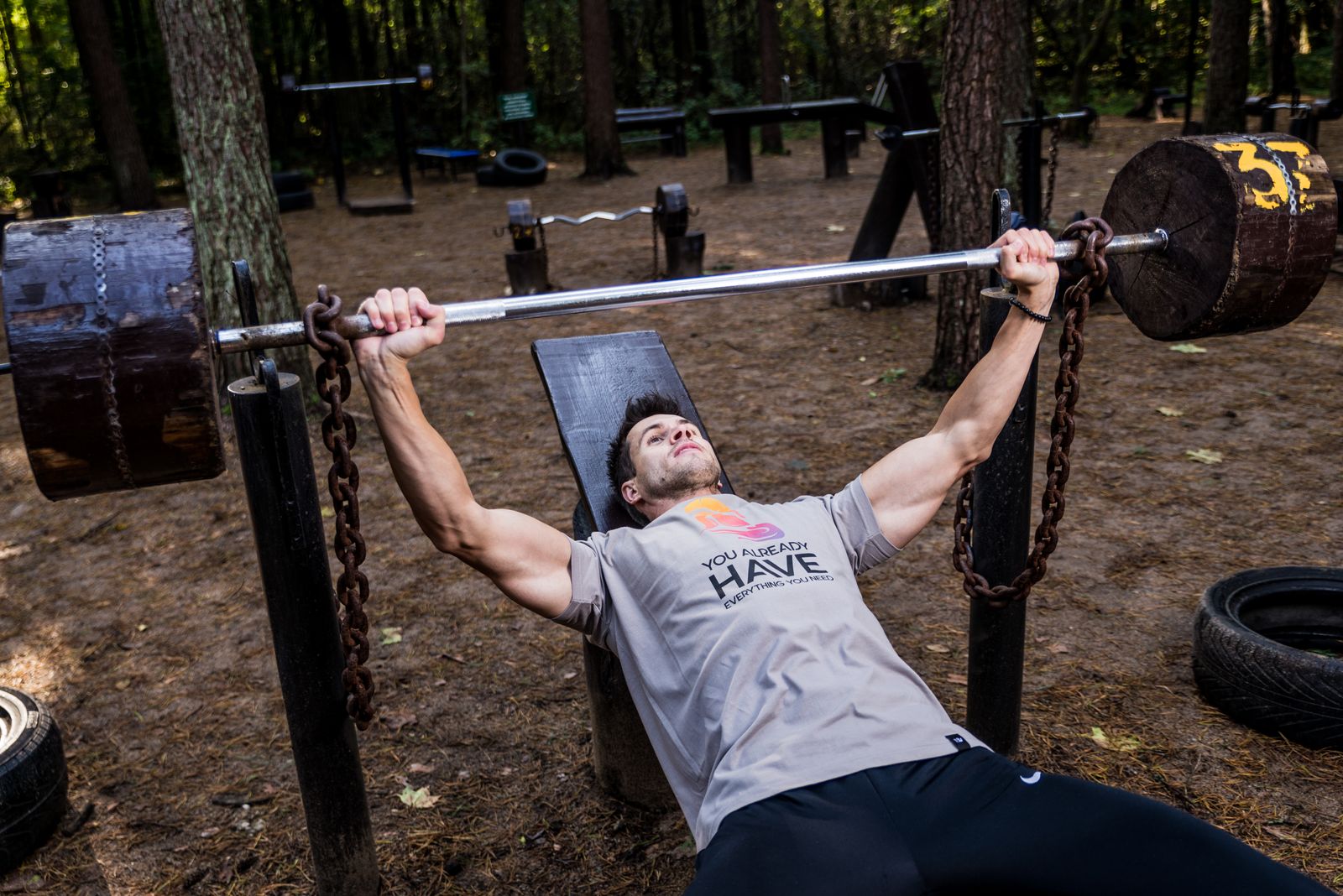
Here’s a concrete case. I regularly do the behind-the-neck barbell press, a movement most people call a red flag and warn against.
For most people, that warning is correct, and you should take it seriously. It’s risky precisely because most lifters don’t have the shoulder mobility to get into that position safely, so their body compensates and something gets strained.
It’s fine for me because I do have that flexibility and control. And that’s exactly my point: the exercise itself isn’t simply “good” or “bad.” Whether it’s safe depends on whether your body has the range and control for it. So please don’t take this as “behind-the-neck press is fine, go do it.” Take it as proof that flexibility is what determines risk.
If you don’t have the mobility for a movement, it’s dangerous for you, no matter how safely someone else does it.
How I Actually Warm Up
My warm-up is simple and specific: I do the exercises I’m about to train, but with light weight first. That primes the exact movements and joints I’m going to load.
One thing I’ve learned the hard way to avoid: I don’t do static stretching right before lifting. I’ve noticed it actually weakens me for the heavy work. So I save the dedicated flexibility and stretching work for its own slot on a rest day, where it builds my mobility without sapping my strength in a session. Mobility work and warming up to lift are two different jobs, and I keep them separate.
What This Means for You
If you lift and you’re stiff, that’s worth taking seriously, probably more seriously than any single exercise warning. Building and keeping flexibility gives your body the room to handle training safely, and pairing that with balanced strength across your whole body means fewer weak links waiting to fail.
You don’t need a martial-arts background like mine. You just need to actually work on mobility and not neglect it, a dedicated session each week goes a long way, and to build strength evenly rather than chasing only the lifts you like. Add some variety so you’re not grinding the same pattern forever, ease into new movements instead of throwing your body at them cold, and warm up by rehearsing the lifts you’re about to do.
That’s the whole approach. Stay mobile, build balanced strength, respect new movements, and your body can keep handling heavy training for a very long time. After more than a decade injury-free, it’s the closest thing to a secret I’ve got, and the flexibility is the heart of it.
