








This guide was written and reviewed by Serge, MSc . As a martial artist and natural lifter with over 10 years of training experience, what I share comes from my own training and from digging into the research behind it.
Affiliate disclosure: This site has affiliate links, including Amazon. As an Amazon Associate I earn from qualifying purchases, at no extra cost to you.

Walk into any gym and you will see people grinding out crunches by the hundred, chasing a six-pack one rep at a time. I have done my share of them over the years, and I still throw a few in now and then. But somewhere along the way I stopped relying on them, and my core got stronger for it.
This is not one of those articles screaming that crunches will wreck your spine and you must never do another one. I still do them occasionally.
What I have found is simpler than that: crunches are just not very effective for the effort, and piling on huge numbers tends to nag at my neck and lower back. So I would rather spend that time on the movements that give more back, and do fewer of them. Train smarter, not longer. Here is how I approach the core.
Why I Do Not Rely on Crunches
A crunch works a narrow slice of the core, the muscles right at the surface, through one small repeated motion. Do enough of them and you feel the burn, but the burn is not the same as building a strong, useful core. For me the math never added up: a lot of reps, a fair bit of strain on the neck and lower back, and not much to show for it compared to other options.
That does not make the crunch evil. A few, done well, are fine, and I still include them sometimes. But if it is one of the least effective things you can do for your core, and it bothers the neck and back when you pile on volume, why build your whole ab routine around it? I would rather pick the movements that do more and keep the crunches as a small extra, not the main event.
There is one more thing worth saying plainly. Some people, because of an existing back or neck issue, are better off skipping crunches altogether. If that is you, there are plenty of ways to train the core hard without them, which is most of what this article is about.
The Core Work I Rely On
My core training leans on a handful of movements that hit it from different angles and ask the whole midsection to work, not just the surface muscles. These are the ones I keep coming back to.
Cable work is a staple for me. Cable crunches and anti-rotation holds let me load the core with real resistance and control the movement the whole way, which beats flinging my own bodyweight around on the floor. The constant tension is where the work happens.
Bench ab work gives me a bit more range and lets me train the midsection with control rather than momentum. Done deliberately, it is a solid way to challenge the core without the neck strain of endless floor crunches.
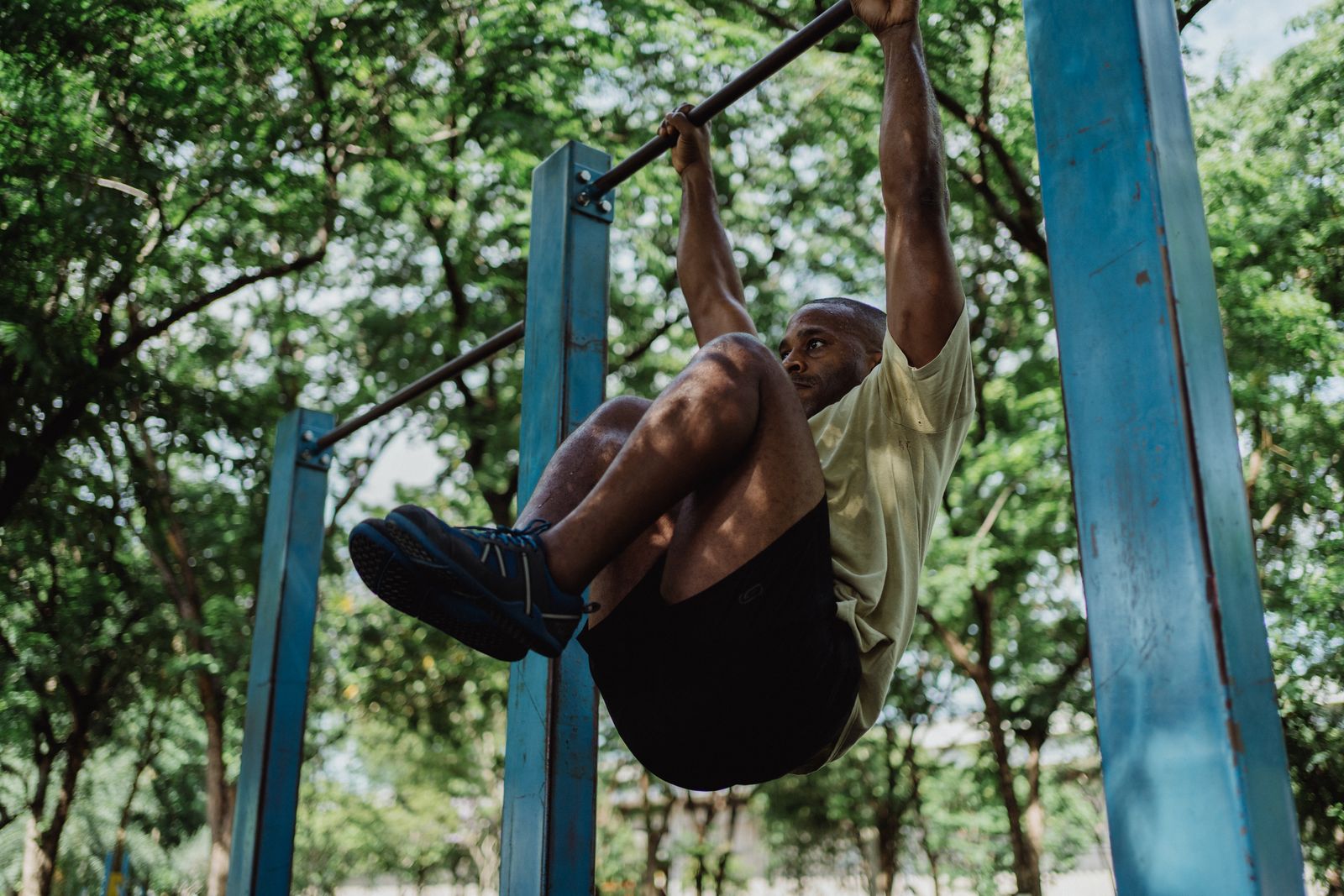
Leg raises are one of the best things going for the lower part of the abs, and they teach you to control the pelvis and keep the core braced. Hanging versions also build grip and let the whole front of the body work as a unit.
Stability moves like planks, dead bugs, and bird dogs round it out. These train the core to do its real job, holding the spine steady while the rest of the body moves. They are not flashy, but a core that braces well is a core that protects you under heavy lifts and in daily life.
You do not need all of these every session. Pick a couple, train them with control, and progress them over time. That beats a hundred sloppy crunches every day of the week.
Abs Are Built by the Whole Approach
Here is the part most ab articles skip. The exercises are only a slice of it. You can have a strong, well-trained core hiding under a layer of fat and never see it, because whether your abs show comes down to how lean you are, and that is mostly about everything outside the ab routine.
For me, two things do the heavy lifting there. The first is running, sprint work especially, which does more for my conditioning and leanness than any amount of ab training ever could.
The second is nutrition. I am not going to hand you a meal plan or calorie targets, because that is personal and not my place to prescribe, but the simple truth is that what you eat decides whether the core you build ever becomes visible. The ab exercises shape and strengthen the muscle. Staying lean is what lets you see it.
One personal habit, for what it is worth: I train abs on an empty stomach. It is just what feels best for me, not a rule you need to follow, but it is part of my own routine.
The Part People Miss: Flexibility Lets You Train Hard Safely
This is the thread that ties it all together for me. A lot of the core moves people avoid out of fear of injury are only risky if your body cannot get into the positions safely. My martial arts background gave me a base of flexibility and body control, and that is a big reason I can train hard, through full ranges, without the aches and tweaks that sideline people.
That is also why I keep banging on about mobility in nearly everything I write. Flexibility is not a separate thing from strength training, it is what makes hard strength training sustainable.
A mobile, well-controlled body handles load and range that a stiff one cannot, and it stays healthier doing it. If you want to train your core hard and keep doing it for years, the flexibility underneath is the real protection, far more than fearing any one exercise.
If You Want a Structured Core Program
I train my core my own way, built up over years, and I am happy piecing it together myself. But not everyone wants to do that, and a ready-made plan can take the guesswork out of it. If you would rather follow a structured, crunch-free core program built around stability and functional movement, Crunchless Core is one to look at.
From what I have seen of it, it focuses on training the core as a unit through different planes rather than endless floor crunches, with follow-along videos for form. I have not run it myself, since I train my own way, so I am pointing you to it as an option rather than from personal use, but it is a solid, well-structured choice if you want a plan to follow.
I may earn a commission if you buy through this link, at no extra cost to you.
Core Training FAQs
Are crunches bad for you?
Not inherently. A few well-performed crunches are fine for most people. The issue is that they are a fairly ineffective use of your time and can nag at the neck and lower back in high volume, so they make a poor centerpiece for a core routine. If you have a back or neck condition, you may be better off skipping them, and there are plenty of effective alternatives.
What are better core exercises than crunches?
Cable work, leg raises, bench ab work, and stability moves like planks, dead bugs, and bird dogs all train the core more completely. They load the midsection with control and teach it to brace and stabilize, which carries over to lifting and daily movement far better than floor crunches.
How often should I train my core?
A couple of focused sessions a week is plenty for most people. The core also gets worked hard during big lifts like squats and deadlifts, so you do not need to hammer it daily. Quality and control beat sheer volume.
Will core exercises give me a six-pack?
They build and strengthen the muscle, but whether it shows depends on how lean you are, which comes down mostly to nutrition and overall activity. You can have a strong core hidden under body fat. Train the core, but understand that seeing it is a separate job.
Do I need equipment to train my core?
No. Planks, dead bugs, bird dogs, and floor leg raises need nothing at all. Cables and a bench add useful options if you train in a gym, but a strong core can be built with bodyweight alone.
